.svg)
FAQ: What is burnout, and how is it different from everyday stress?

Question: What is burnout, and how is it different from everyday stress?
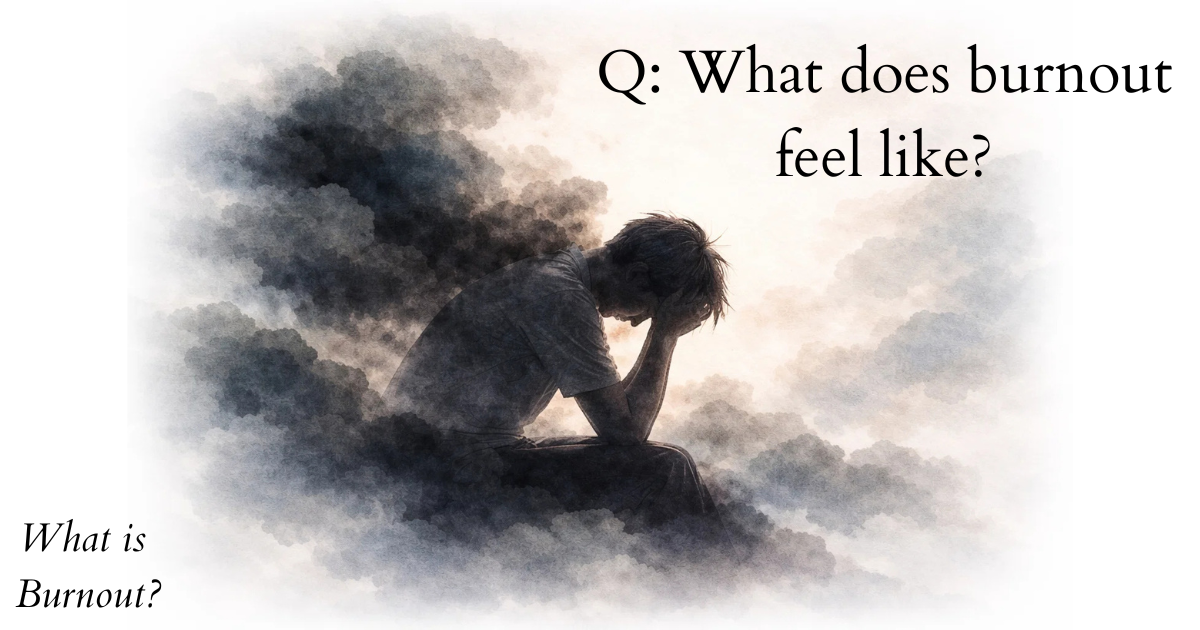
Burnout is a body and mind state that arises after chronically insufficient rest and recovery
According to the World Health Organization, burnout is specifically defined by chronic, unmanaged stress.
Burnout is often triggered by a prolonged buildup of unprocessed stress and is not just about being "really stressed" – it's what happens when stress accumulates over time without being properly released.
While burnout is stress-related, the primary difference is in duration.
Stress is often short-term (think hours or days) and transient (it comes and goes throughout an average day), and Is like surfing on a wave. Every so often you fall of the wave and get a cold shock of water. But you pull yourself back up and get back to surfing without too much difficulty.
Burnout is often long-term (think weeks, months or even years) and persistent (it doesn't go away after a good night or even few days' rest), and is like treading water in a storm. With constant waves lapping over your face it's hard enough just to keep your head above water, let alone to summon the energy to swim for land.
Stress can cause a momentary spike in things like energy, anxiety, motivation, while burnout can show up in longer-lasting:
• Exhaustion or fatigue
• Uncharacteristic irritability or anxiety
• Pessimism or anxious thoughts
• Emotional emptiness or numbness
• Persistent sleep issues
• Brain fog or cognitive issues
The Mayo Clinic adds that while stress involves 'too much' pressure, burnout is about feeling 'empty' and devoid of motivation.
Finally, keep in mind that burnout is more of a spectrum rather than a point, and doesn't have a clear, clinical diagnosis.
Even though there are common signs of burnout (such as those above) as well as assessments that can spot burnout risk (like this one), there is no clinical diagnosis for burnout, and there is no single point at which you are officially burned out.
If you are concerned that you are burned out, we urge you to take it seriously. Educate yourself with other posts, explore our resources, and if you consult a doctor, psychologist, or trained professional for advice.